

Selling to Keep Buying
A corporate VC needs €10m for a hot direct co-investment before an oversubscribed round closes
31/03/26
Heliox SAS is an independently owned specialty chemicals company based in the French Alps, and its growth over the past decade owes a great deal to a strategy most of its peers don't run: a corporate venture (CVC) arm that isn't there to make money.
Heliox uses its CVC as a scouting function. It backs emerging technology funds in the sector, gets exposure and co-investment rights into the companies those funds hold, and — when something looks synergistic enough — acquires it outright. It's worked. More than half of Heliox's revenue today comes from companies the CVC first found. The programme itself is small, roughly €250m in AUM, and self-funding: distributions get recycled straight into new fund commitments and co-investments, with no fresh capital from the balance sheet in years.
That self-funding model is now under strain. Portfolio companies are staying private longer, distributions have slowed, and the CVC needs liquidity to keep backing the managers its acquisition strategy depends on. The immediate trigger: a €10m co-investment slot in a fast-growing company sourced through one of Heliox's GPs is closing this quarter as part of an oversubscribed round. Miss it, and the allocation goes to someone else.
Background
With distributions insufficient to cover expected short-term drawdowns, Heliox has one real option: sell a fund stake to fund the new commitment.
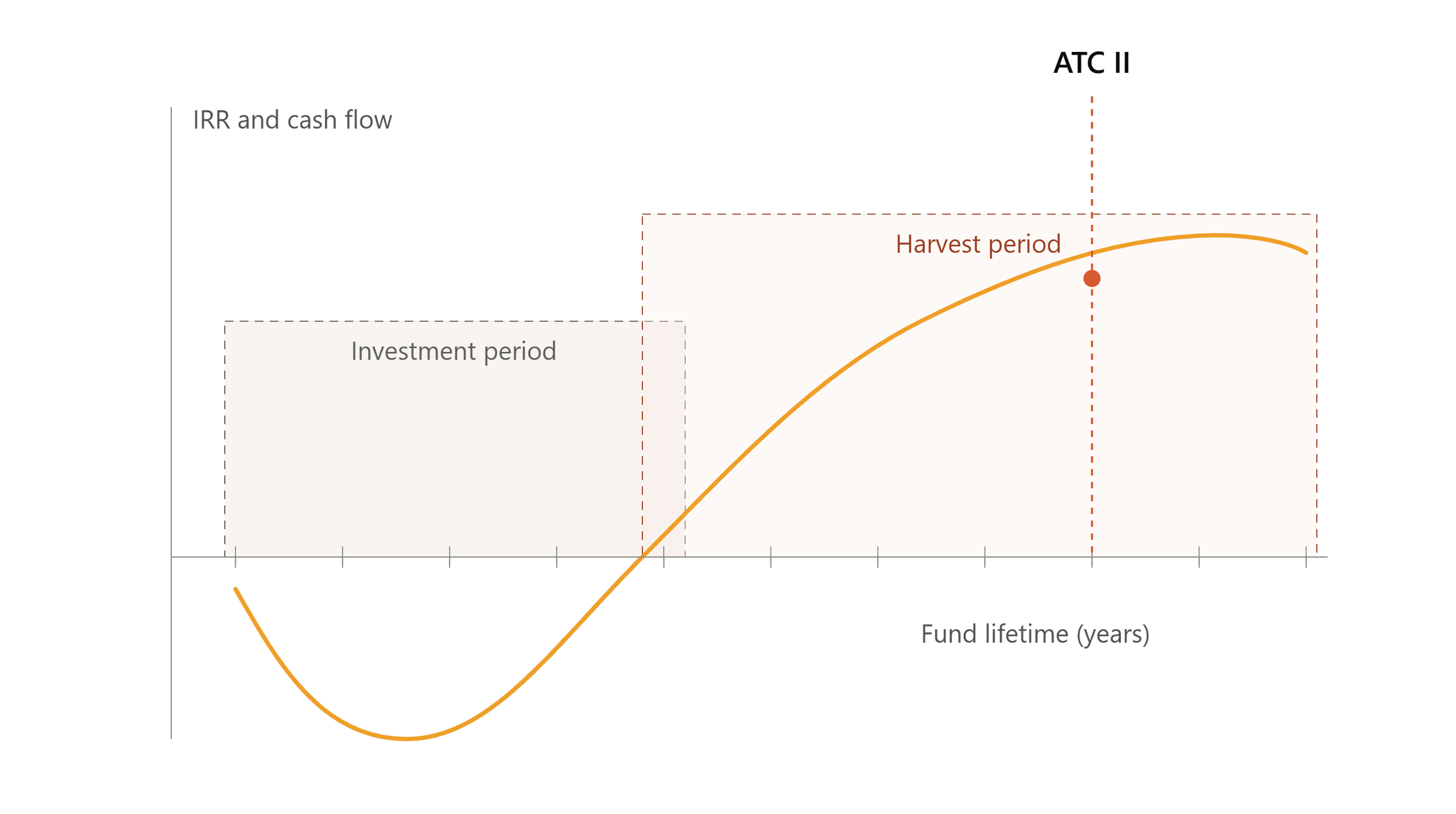
The obvious candidate is Amber Fern Capital Fund II ("AFC II"). Heliox has backed Amber Fern across three vintages — Funds I, II and III — a relationship stretching back more than a decade, and remains an active LP in Fund III with a standing allocation into the manager's upcoming Fund IV. Fund II, though, is a different story. It's past its investment period and firmly in harvest mode — any new co-investment flow now comes through Fund III, not II. The position hasn't stopped being valuable to Amber Fern; it's stopped being useful to Heliox.
Selling it isn't leaving the relationship. It's trimming the one vintage that no longer does the job the others still do.
Problem
Heliox's MD calls Amber Fern's managing partner directly rather than letting the position simply hit the market. Given the history, Amber Fern is supportive, but sets two conditions:
The buyer needs to be strategically relevant, ideally a long-term LP
The process needs to stay quiet; no broad shopping around and no signal to the market that a cornerstone LP is trimming a position
Heliox brings in Joran Partners to run the sale within those constraints.
Joran's first read is that the standard secondary buyer universe isn't the right fit here. Generalist secondary funds would likely price the position lower, and few would be willing to commit to Amber Fern's future funds as a primary investor, one of the manager’s key conditions.
This means narrowing the search to buyers who would actually want an ongoing relationship with Amber Fern, not just the fund stake. Joran recommends targeting family offices and sector-focused corporates over traditional secondary capital. Heliox and Amber Fern sign off on the approach.
Joran runs a discreet, targeted process over roughly 2 months, approaching 8 prospects. The winning bidder is a Belgian family office with its own history with Amber Fern: it had looked at Fund I early on, passed, and then couldn't get into either Fund II or III once demand caught up.
The position (NAV of roughly €13.5m) sells at a 25% discount to NAV, landing at just over €10m. For the family office, it's exposure to a manager it had wanted for years at an attractive price, along with an allocation into Fund IV when the time comes. For Amber Fern, the process stays contained, capacity isn't strained, and a new long-term LP relationship comes out the other side.
Solution
Outcome
Heliox gets its €10m, closes the ZCrop commitment on schedule, and keeps its acquisition funnel running without touching the balance sheet while still remaining a backer of AFC through Fund III.
Disclaimer: This case study is for illustrative purposes only and does not constitute financial, legal, or tax advice. It is a hypothetical, simplified scenario intended to demonstrate how a secondary market transaction might be structured, and does not represent an actual client, transaction, or investment recommendation. The organizations, individuals, and figures depicted are fictional; any resemblance to real entities or persons is coincidental. Nothing in this case study should be relied upon in making an investment decision.