
Buying the Movement
A rival's takeover bid forces a Swiss watchmaker's family office to raise CHF 105m on the clock
18/08/26
Background
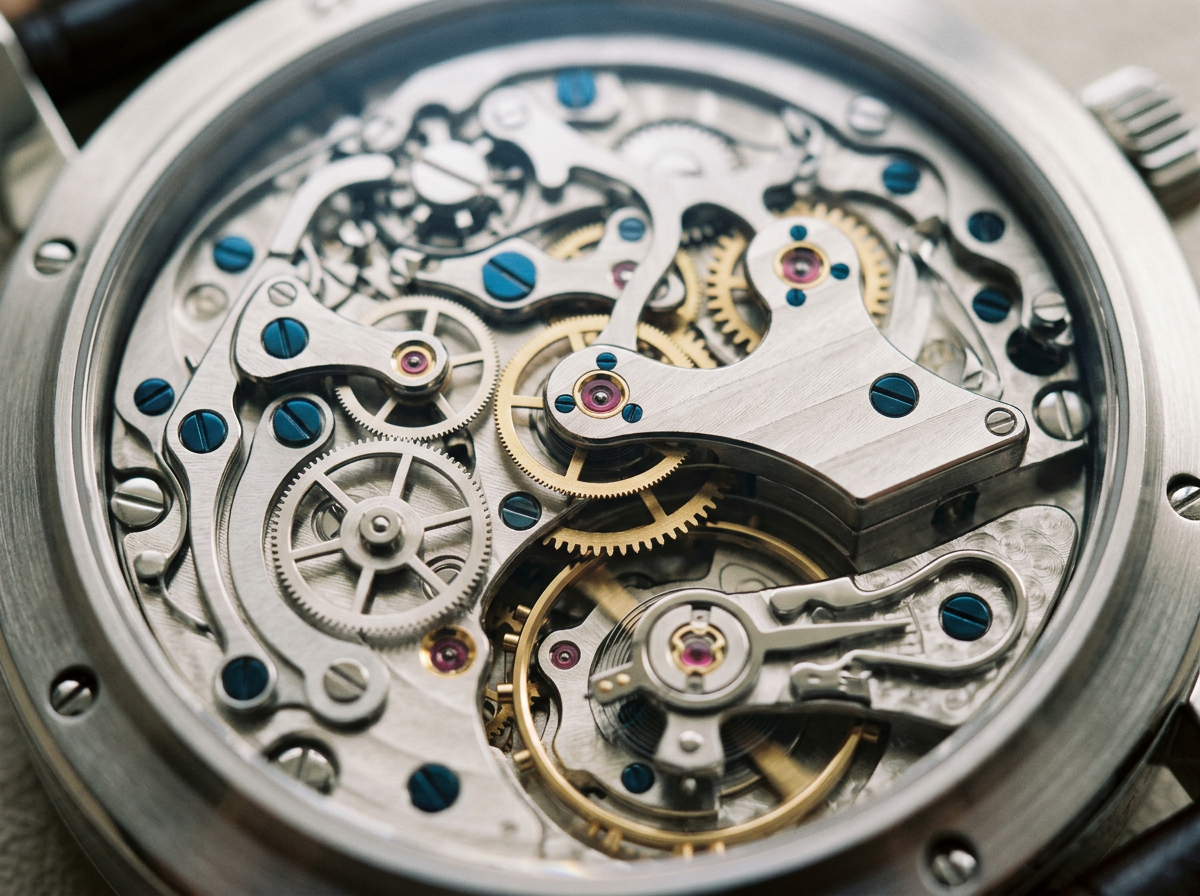
Limmat AG has been run by the same family for four generations, a Swiss watchmaker known for exceptional case design and finishing. Since its founding, every Limmat watch has run on calibres from Reculet SA, a small, independent movement maker in the Vallée de Joux. Decades ago, the Limmat family set up a separate family office — today around CHF 570m in diversified assets — to manage its wealth apart from the business. The two have always stayed close, though: dividends from Limmat have historically been a core source of income for the family office itself.
That century-old relationship with Reculet is now under threat. A larger watch group approached Reculet with an acquisition offer, and for a few tense weeks, Reculet's owners seriously considered it. Nothing closed, but the warning was clear: if a competitor ever did acquire Reculet, Limmat's entire production could be cut off or deprioritized overnight.
CIO Elena Roth, who manages the family office, watched the board reach the same conclusion: the only way to remove that risk permanently is to own Reculet themselves. Management puts the cost at CHF 105m, capital the business itself can't fund from its own, currently strained, cash flow.
| Fund | Vintage | Committed | Funded | Unfunded | % unfunded | NAV |
|---|---|---|---|---|---|---|
| Buyout Europe IV | 2016 | 30 | 30 | – | 0% | 45 |
| Buyout Europe V | 2019 | 35 | 35 | – | 0% | 46 |
| Growth Partners III | 2020 | 15 | 15 | – | 0% | 19 |
| Special Situations II | 2021 | 20 | 15 | 5 | 25% | 16 |
| Private Credit Opportunities | 2021 | 10 | 8 | 2 | 20% | 8.5 |
| Venture Fund II | 2022 | 10 | 6 | 4 | 40% | 5 |
| Infrastructure Co-Invest I | 2023 | 5 | 2 | 3 | 60% | 2 |
| Total | 125 | 111 | 14 | 142 |
CHF 105m is required from a family office whose CHF 570m portfolio is allocated much like many of its peers:
Public equity - 35%
Private equity - 25%
Fixed income - 20%
Real estate - 10%
Cash and equivalents - 10%
Roth rules out selling into public markets. They've been range-bound for a year, and there's no appetite to sell at current levels for a need this size. Fixed income and cash provide some room, but not CHF 105m of it without leaving the family office thin on near-term flexibility it may still need. That leaves private equity; CHF 125m in committed capital across seven funds, built up over the past decade, spanning buyout, growth, venture and private credit.
Problem
Elena calls Joran Partners to understand what's actually possible: pricing, process, and how much of the book she'd realistically need to touch.
CHF 105m against a book worth roughly CHF 142m suggests a partial sale should cover it. The harder question is which positions, and Elena has an additional constraint atop of the obvious pricing one: the acquisition financing has to land in step with an M&A timeline the family doesn't fully control
Whatever Joran proposes has to work on this timeline, not just get the best price.
Joran's read starts with the two most mature positions: Buyout Europe IV and V. Both are fully funded, well into their lives, and should price close to NAV. They’re a natural anchor for the deal, both on economics and on the ease of finding buyers. Another interesting call is Growth Partners III, which is fully funded and performing well.
Joran suggests the younger, less mature positions (Venture Fund II, Infrastructure Co-Invest I) are best left alone. Both carry meaningful unfunded commitments and would likely price at steeper discounts, for less benefit toward the target.
Joran prices the 3 funds off the latest GP-reported NAVs and confidential conversations with 2-3 buyers. The 2 Buyout Europe funds land close to NAV, as expected. Growth Partners III sees a modest discount, reflecting broader valuation resets across growth and venture strategies. By letting buyers spread the payment out over time rather than paying it all on day one, the discount stays smaller than it would otherwise need to be.
A confidential process brings in a small group of well-capitalised secondary buyers able to close without syndication (both deadlines leave no room for a longer process). Bidding lands at a blended price close to CHF 105m across the three funds, and GP consents follow without complication.
Closings are staggered as consents and deferrals land, with the capital flowing into the acquisition war chest as the Reculet deal closes.
Solution
Limmat secures the capital for the acquisition and sures up a major flank in its core business. It achieves this without having to touch public equities in a flat market or leaving itself short on near-term flexibility. The acquisition is executed on schedule, and the younger parts of the PE book stay untouched.
A year later, Elena finds herself in the Vallée de Joux, watching a craftsman assemble the new in-house movement that will go into the Limmat she ordered for herself.
Outcome
Disclaimer: This case study is for illustrative purposes only and does not constitute financial, legal, or tax advice. It is a hypothetical, simplified scenario intended to demonstrate how a secondary market transaction might be structured, and does not represent an actual client, transaction, or investment recommendation. The organizations, individuals, and figures depicted are fictional; any resemblance to real entities or persons is coincidental. Nothing in this case study should be relied upon in making an investment decision.